


by Alex Gangitano and Laura Kelly - 09/08/23 5:30 AM ET
 Security personnel stand guard near a G-20 communication billboard with
the portrait of India’s prime minister Narendra Modi inside the
international media center at the G-20 venue days ahead of its
commencement in New Delhi on September 7, 2023. (Photo by TAUSEEF
MUSTAFA / AFP) (Photo by TAUSEEF MUSTAFA/AFP via Getty Images)
Security personnel stand guard near a G-20 communication billboard with
the portrait of India’s prime minister Narendra Modi inside the
international media center at the G-20 venue days ahead of its
commencement in New Delhi on September 7, 2023. (Photo by TAUSEEF
MUSTAFA / AFP) (Photo by TAUSEEF MUSTAFA/AFP via Getty Images)The absence of the leaders of China and Russia at the G20 summit in India will allow President Biden to take center stage, rallying allies to push back against the goals of Beijing and Moscow in the global arena.
While some experts say the strength of the G20 as a global economic alliance has diminished, it could provide Biden an opportunity to begin reeling in countries where China has had an outsized influence.
But Biden will also have to balance the diversity of interests from G20 members, with those in Latin America, Africa and Asia holding back from joining the U.S. and other Western partners in the hard policy lines they have drawn on Russia and China.
“Many of them do not want to be forced into the middle of a U.S.-China fight,” said Scott Kennedy, senior adviser and trustee chair in Chinese Business and Economics at the Center for Strategic and International Studies.
“They want these two large powers to find a way to peacefully coexist. To the extent to which the Biden administration can frame the broader issues about addressing collective problems that everyone faces … I think that will be a potentially effective way to differentiate the U.S.’s effort to lean forward and China’s modest retreat inward that is occurring at the same time.”
Another major agenda item for Biden is a push to reshape the World Bank, an effort meant to counter China by providing an alternative means of financing separate from Beijing for development projects.
Ralph Winnie, vice president of the Global Development & China Program with the Eurasia Center, said Biden may have an opportunity to galvanize member countries without explicitly selling the reforms as being anti-China.
“I think it’s important to create choices and opportunities for all people and have a banking structure that is going to be very effective in creating jobs and economic opportunities,” he said. “That’s what people have to believe in and what they have to see. It’s not simply just having a system to counter the Chinese.”
Instead of attending, Chinese President Xi Jinping is opting to send the country’s premier, Li Qiang, to India on his behalf. The Chinese, whose economy is facing increasing setbacks, did not give details into why Xi has decided not to join but called the G20 an important forum for international economic cooperation.
While Biden is set to avoid major confrontations with America’s two biggest foes — Xi, as well as Russian President Vladimir Putin — their nonattendance will likely weaken the impact of the meeting where the world’s biggest economies seek to deliver consensus on some of the most challenging global issues.
“I think the utility of the G20 as a kind of the premier, global grouping to resolve global economic issues is frankly just diminishing,” said Sadanand Dhume, senior fellow with the American Enterprise Institute.
“The G20 more broadly is just becoming less important and less useful, precisely because geopolitics has come to the fore since the Russian invasion of Ukraine.”
And another growing global group is lurking — Chinese and Russian leaders are coming off a separate meeting with the BRICS alliance, consisting of Brazil, Russia, India, China and South Africa, who are trying to position themselves as an alternative to the Group of nations formats.
But at the G20, Biden holds a distinct advantage as the West’s most powerful and effective leader, with deeper ties with partners and allies and a stronger U.S. economy than a year ago, and especially on matters involving Ukraine.
“[The Biden administration] had success on the multilateral level in Europe and in Asia, pushing back on Russia in Ukraine, on a variety of different issues that I think have had an impact on significant progress on the relationship with India,” Kennedy said.
“I wouldn’t say that they are going to dominate the G20, but they can provide significant leadership in a way that reflects a significant turning point in the geostrategic competition with China.”
It’s unclear how much Biden and U.S. allies will focus on Russia’s war in Ukraine, but also complicating matters is the site of the meeting in India, which is a longtime purchaser of Russian military equipment and has increased its imports of Russian oil by 11 times following an international price cap meant to punish Moscow.
Ukrainian nongovernmental organizations signed an open letter opposing Russian representation at the summit, in general, and criticized the sale of Russian fossil fuels on the global market as funding Putin’s war and hindering the fight against climate change.
The groups called out China, Brazil, Mexico, Argentina, Saudi Arabia, Turkey and South Africa — but notably left out India — as specific offenders and even took shots at Kyiv’s supporters such as South Korea, Australia and the European Union as holding back from cutting off energy dependency on Moscow completely.
Biden’s leadership at the G20 will also be a focus, as the president has tried to display himself as the leader of Western allies throughout the war in Ukraine. Ahead of the summit, Biden’s reelection campaign dropped an ad highlighting his February visit to Kyiv, showing off his role on the world stage.
Former President Trump, who is the front-runner in the 2024 GOP presidential primary, demanded attention at the G20 during his presidency, but his America First agenda prevented allies from mobilizing significant support for the goals he would push at these summits.
Kennedy argued that this G20 could be a bookend to the Trump years now that, nearly three years into Biden’s presidency, the U.S. economy is improving beyond other economies coming out of the pandemic.
“This potentially is a bookend to that period, where the Biden administration can assert significant leadership, mobilizing major countries around the world to address security issues, economic issues of common concern,” he said.
Sarakshi Rai contributed.

В США продолжаются пропалестинские протесты студентов в Калифорнийском университете и Гарварде с осуждением гибели гражданского населения в Газе в ходе продолжающейся войны между Израилем и ХАМАСОМ, передает собственный корреспондент агентства Kazinform со ссылкой на NBC News.
В четверг администрация Калифорнийского университета вновь столкнулась с пропалестинскими протестующими из числа своих студентов в городском районе Вествуд.
Полиция западного побережья Лос-Анджелеса была приведена в высокую степень готовности, организованы дежурные патрули. Пострадала одна полицейская машина, у которой было порезано колесо.
На внешней стороне учебного корпуса были сделаны надписи, которые впереводе с арабского языка означали «Восстание».
Высокопоставленные руководители Калифорнийского университета сделали заявление о том, что не потерпят создание лагерей. Демонстранты были проинформированы, что, если они не разойдутся, им грозит арест и возможное дисциплинарное взыскание.
Ранее, 30 апреля власти разогнали недельный лагерь студентов в Калифорнийском университете, более 200 человек были арестованы.
Аналогичная ситуация возникла в Гарвардском колледже. Помимо протеста против гибели гражданского населения в Газе, студенты осудили исключение 13 учащихся, которые принимали участие в предыдущем пропалестинском протесте.
Помимо отчисленных, еще 5 студентов были отстранены от учебы, а более 20 получили испытательный срок.
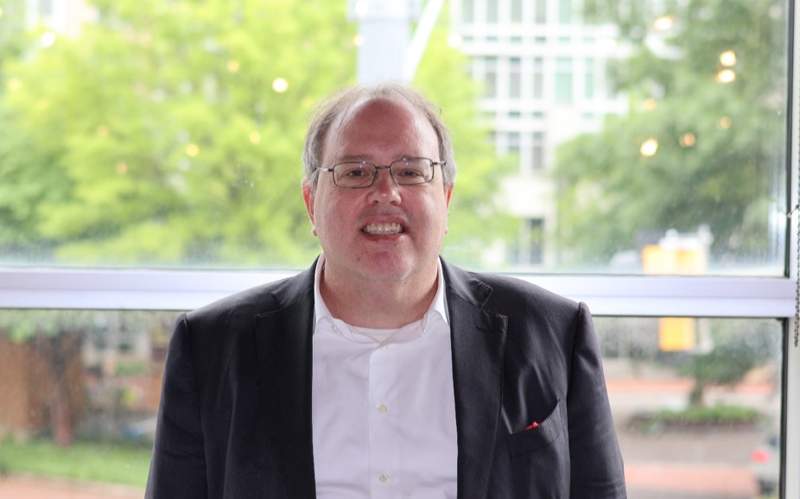
Ситуацию по протестам в студенческой среде прокомментировал агентству «Казинформ» вице-президент Евразийского Центра США Ральф Винни.
Эксперт отметил, что беспокойство в университетских городках вызывает то, что люди имеют право протестовать, и это вроде как правильно - высказывать свое недовольство и поощрять диалог, но в то же время имеет место высказывания антисемитского характера в адрес других студентов – евреев.
Все студенты имеют право на спокойное обучение. Никто не имеет право препятствовать посещению занятий, подготовке к выпускному, иметь возможность пройти через центральный двор, не опасаясь какого-либо насилия.
Это те проблемы, которые необходимо решать, и в настоящее время видно, что администрации учебных заведений предпринимают все больше мер по недопущению срыва учебного процесса.
Р.Винни считает, что полиция действует гуманно, так как многие протестующие из студенческой среды не понесли ответственности в США.
Hello, Dear Ralph E. Winnie,


The next stage in the development of relations will be cooperation between the United States and Central Asia in the field of security – expert

American experts shared their assessments of how relations between the United States and the countries of Central Asia, which are already cooperating in various formats, will develop. The opinion of experts is in the material of Kazinform's own correspondent.
A new impetus to strengthen political ties between the United States and Central Asian countries was received in September 2023 at the first C5+1 summit within the framework of the UN General Assembly in New York, during which US President Joe Biden met with the leaders of Kazakhstan, Kyrgyzstan, Tajikistan, Turkmenistan and Uzbekistan. Further development was achieved in the economic sphere with the involvement of the public and private sectors at the first B5+1 Forum, held in Almaty from March 13 to 15 in order to improve the business environment between the United States and Central Asia. Key experts from influential American think tanks gave assessments on this event and the future prospects for the development of US relations with the countries of the Central Asian region.

Gavin Helf, Senior Expert on Central Asia at the United States Institute of Peace, positively assessed the B5+1 Forum, which is the result of a successful meeting between the presidents of the United States and Central Asian countries last year in New York. The expert believes that all the countries of the Central Asian region are very interested in attracting American investments. However, the question is how the Central Asian countries will create the conditions for this, what laws will be adopted that will ensure guarantees and stimulate the interest of American business in the region. According to Gavin Helf, the next stage in the development of the political "C5+1" and economic "B5+1" formats will be the expansion of cooperation between the United States and the five Central Asian countries in the field of security, which provides for a wide variety of forms of cooperation - from protecting the interests of participating countries and companies to logistics and climate change.
- Central Asia and the logistics passing through its territory, the so–called "Middle Corridor", also known as the Trans-Caspian International Transport Route, and the Chinese initiative "One Belt and One Road" are an area of mutual interest and cooperation between Western countries and China, - said Gavin Helf.
The Middle Corridor is important not only for sustainable economic growth in Central Asia, but also for the transit of goods between Europe and China.

Ralph Winnie, Vice President of the Eurasian Center, believes that the United States and Central Asian countries are moving in the right direction. A well-developed American business will contribute to the development of small and medium-sized businesses, increase jobs and become an engine of economic growth in the region. B5+1 is a unique platform for establishing contacts in the business environment, searching for partners between companies in Central Asia and the United States. According to the expert, professional contacts will develop from personal relationships.
"Those American companies that come to Central Asia not only want to trade and invest, but also want to understand the culture of the region in order to work more closely together in order to become a very viable business partner," – Ralph Winnie said.
Central Asia should have a strong security component for any type of business in the region. In this regard, the rule of law, tax incentives and other incentives will be a key factor in advancing economic ties and attracting foreign investment.
In these areas, the United States will focus its attention as part of the development of multi-format cooperation with the countries of Central Asia.

Ariel Cohen, Managing Director of the Energy, Economic Growth and Security Program at the International Tax and Investment Center, noted that it is important to fill relations between the United States and Central Asia with more content and value. The development of the economic component is very important, but the development of business with Western companies may face some difficulties. The expert recalled that the Central Asian region has no access to the sea and is far from international markets. As a result, this affects the rise in the cost of imported or exported products and resources, which makes it less competitive. However, rare earth elements, which are rich in the region, remain in demand because they do not require large volumes. The Geological Survey of Kazakhstan is very advanced in terms of digitizing information and making information accessible to Western potential investors. According to the expert, for the successful development of the B5+1 format, it is necessary to take measures to improve the speed of container transportation, reduce bureaucracy for transporting goods across several borders and increase logistics capacity.
"The United States and Europe should be involved not only in the economic sphere of Central Asia, but also in an active dialogue in the field of education, health and security," Ariel Cohen stressed.


